Padel looks simple from the outside, which is exactly why so many beginners underestimate how quickly a few small habits can shape every point they play. The game rewards control, positioning, and awareness far more than raw force, and that can be a surprise if your background comes from tennis, squash, or another racket sport. Beginners often make the same mistakes not because they lack effort, but because they are still learning how the court, the walls, and the rhythm of doubles all work together. The good news is that most early errors can be corrected with clear focus and a handful of repeatable drills. Once you know what to watch for, progress can feel faster than expected. That is what this guide is built to do: help you spot the most common beginner mistakes and train simple habits that make you better almost immediately.
Poor Grip and Racket Control
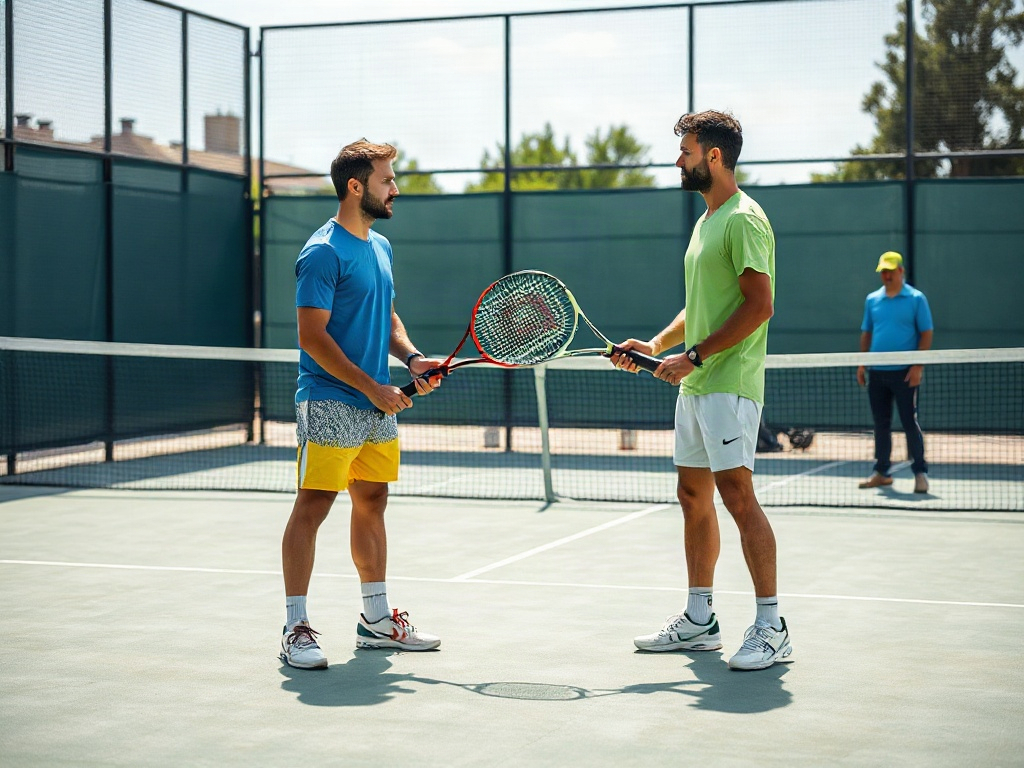
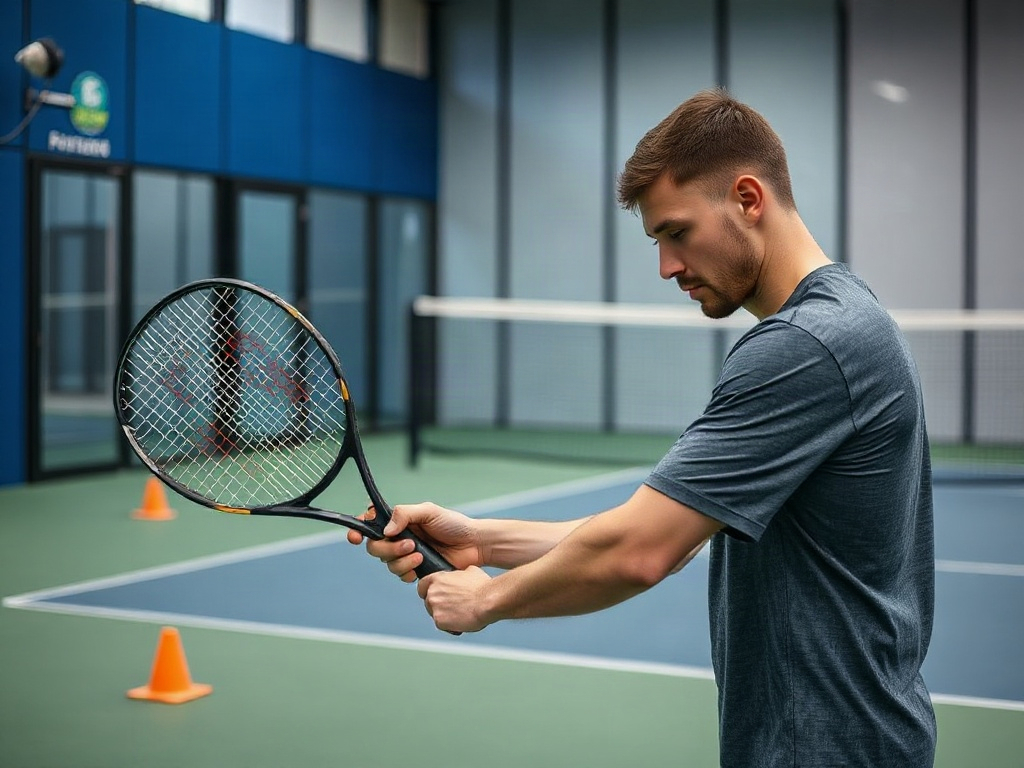
One of the first problems many beginners face is gripping the racket too tightly or holding it in a way that makes the face unstable. When your grip is tense, your wrist becomes stiff, your touch disappears, and even simple volleys start flying off target. It also becomes harder to absorb pace from the ball, which means you lose control exactly when you need it most. A good padel grip should feel secure but not rigid, allowing you to react quickly without forcing the shot. If your arm gets tired early, your contact point feels inconsistent, or your balls keep drifting long, the grip is often part of the problem. Improving this is less about dramatic technique changes and more about building calm, repeatable contact habits.
Beginners usually benefit from drills that reduce pressure and reinforce a relaxed, stable hand position. Instead of trying to hit harder, the goal is to make the racket feel like a natural extension of your arm. Short sessions with simple movement patterns can do more than long, unfocused hitting practice. The more often you repeat clean contact, the more reliable your touch becomes in real points. That is why grip work should be practical, not theoretical. It should help you feel the difference between tension and control in a very direct way.
- Wall rally drill: Hit gentle forehands and backhands against a wall while keeping your wrist soft and your contact smooth.
- Shadow swings: Practice your strokes without a ball, focusing on relaxed fingers and the same grip pressure on every swing.
- Short-court volley drill: Stand close to the net and exchange soft volleys to train clean contact without overgripping.
Standing Too Close or Too Far from the Net
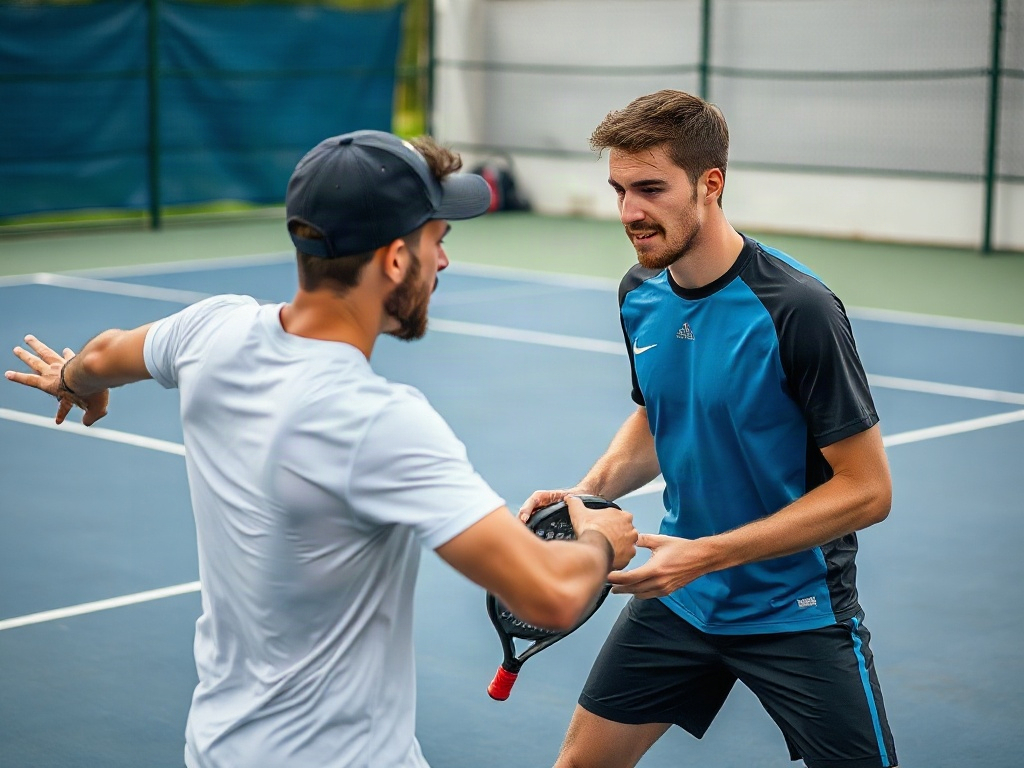
Court positioning is one of those skills that beginners often overlook because it does not feel as exciting as a flashy forehand. Yet in padel, where space is tight and angles matter, being in the wrong place can make every shot more difficult. If you stand too close to the net, you may get punished by lobs and lose time to recover. If you stand too far back, you give up pressure and allow your opponents to attack freely. Good positioning is less about perfect athleticism and more about understanding where your body should be relative to the ball, your partner, and the direction of play. This is why beginners often feel like they are always one step late: the issue is not only movement speed, but starting position.
To improve, it helps to think in terms of spacing rather than chasing the ball. You want to be close enough to threaten the net, but not so committed that a simple lob turns into an emergency sprint. You also want to move as a pair, because padel doubles rewards coordination more than individual heroics. Many beginners accidentally create big gaps between themselves and their partner, which opens easy targets for the other team. Repetition helps, but awareness matters just as much. Once you begin to recognize where you are standing before the ball is even struck, your decision-making gets much cleaner.
| Positioning Habit | Common Beginner Result | Better Adjustment |
|---|---|---|
| Too close to the net | Easy lobs and awkward recovery | Step back a little and stay balanced |
| Too far behind the net line | Reduced pressure and weak attacking chances | Move forward with your partner after controlled shots |
| Not moving as a pair | Open spaces and confusion on defense | Shift together in small, coordinated steps |
Swinging Too Hard Instead of Playing Controlled Shots
Many beginners think padel is a power game because they see fast volleys, hard smashes, and aggressive winners. In reality, control usually wins more points than speed at the beginner level. When you swing too hard, your timing becomes fragile, your balance breaks down, and the ball often leaves the court in the wrong direction. Controlled shots keep you in the rally longer and make it easier to build pressure without taking unnecessary risks. The smartest players understand that placement and patience create openings that power alone cannot force. If your first instinct is to hit harder every time, you may be making the game more difficult than it needs to be.
There is a big difference between playing softly and playing passively. Controlled padel still involves purpose, depth, and intention, but it avoids the panic that leads to unforced errors. Beginners should learn how to change pace without losing structure, because that is what makes a shot useful rather than reckless. It is also easier to recover after a controlled stroke, since your body stays more balanced and your next move starts sooner. The best drill work in this area reinforces target awareness and touch. Once you can place the ball where you want it, your confidence grows naturally.
- Target-zone drill: Place cones or markers in specific parts of the court and try to land the ball there with medium pace.
- Soft cross-court rally: Rally at reduced speed and focus on keeping the ball low, steady, and controlled.
- Two-bounce control drill: Let the ball bounce twice before playing it, which helps train patience and better timing.
Ignoring the Walls
New players often treat the walls as something to fear instead of something to use, and that hesitation costs them time and options. In padel, the walls are not just part of the court design; they are a major strategic tool. When you learn how the ball comes off the back and side walls, you gain extra seconds to read the shot and prepare your response. That extra time is often the difference between a rushed error and a composed return. Beginners who avoid the walls usually end up swinging too early, guessing under pressure, or giving away points because they expect the ball to behave like it would in tennis. Once wall awareness improves, defense becomes calmer and far more effective.
Working with walls takes patience because the rebound changes your usual contact timing. The key is not to attack every ball immediately, but to let it come to you in a more manageable way. This is why wall practice should feel deliberate and low-stress at first. You want to watch the bounce, judge the angle, and choose a shot based on the rebound rather than on panic. The more familiar the wall contact becomes, the less intimidating it feels during real matches. Over time, the walls stop being obstacles and start becoming allies.
Poor Footwork and Balance
Footwork is one of the clearest signs of a beginner’s level because it affects almost everything else in the rally. When your feet are slow or heavy, your contact point becomes cramped, your stroke loses shape, and your recovery takes longer than it should. Balance matters just as much, because even a well-aimed swing can fail if your body is leaning, twisting, or reaching too far. Small adjustment steps help you arrive in the right place with enough stability to hit cleanly. Padel is rarely about long sprints; it is usually about short, sharp movement and efficient recovery. If your feet are working well, your shots tend to look better almost automatically.
Beginners often try to solve movement problems by moving faster overall, but that is not always the answer. Better footwork usually starts with timing, spacing, and the habit of staying light on your feet before the ball arrives. A controlled split step and a quick recovery step after contact can make a surprisingly large difference. You do not need complicated movement patterns to improve; you need consistent, repeatable ones. This is an area where a few focused drills can change how stable you feel in every rally. The difference is especially noticeable when you stop overreaching and start arriving earlier.
- Ladder or cone-shuffle drill: Move quickly through a short pattern to build light, efficient foot speed.
- Split-step timing drill: Practice landing softly just before your opponent hits the ball so you can react faster.
- Recovery-step drill: After every shot, take an immediate recovery step back into an athletic ready position.
Not Communicating with a Partner
Because padel is a doubles game, silence can be just as damaging as a bad shot. Beginners often assume their partner will understand their intentions without speaking, but that assumption leads to hesitation, collisions, and missed balls. Clear communication makes the court feel smaller in a good way, because both players know who is taking the shot and where the next cover area is. A simple call can prevent confusion before it starts. Even a short phrase can help a pair move with more confidence and less panic. Communication is not just about tactics; it is also about trust, rhythm, and shared responsibility.
Good partners do not need constant conversation, but they do need simple signals and a predictable way of working together. This becomes especially important under pressure, when both players may think the other one is taking the ball. Beginners often improve quickly once they start talking more clearly and more often. The goal is not to be loud, but to be useful. When you know who is covering which space, you react faster and commit less often to the wrong shot. That clarity can save several points in a single set.
- Call “mine” early: This prevents both players from going for the same ball.
- Agree on lob coverage: Decide who takes lobs to avoid split-second confusion.
- Reset after mistakes: Use short, positive communication after errors so the next point starts cleanly.
Neglecting Serve and Return Basics
The serve and return are the first two shots in every point, which means they set the tone for everything that follows. Beginners often treat them casually, but poor execution here hands immediate control to the other team. A rushed serve or an uncontrolled return can turn a neutral start into a defensive scramble. In padel, these first exchanges are valuable because they help establish position, rhythm, and pressure. If you can serve with more placement and return with more purpose, you will win points more efficiently than by trying to overpower the rest of the rally. The foundation of good padel often begins before the point has really developed.
Many beginners serve without a clear target and return without a plan, which makes both shots easier to read. Instead of thinking only about getting the ball in, it helps to think about where the return will go and what kind of response you want next. A good serve can force a weak contact, and a good return can neutralize the advantage of the server. These skills do not need to be complicated to be effective. They just need repetition, consistency, and a stronger sense of intention. Once you treat the opening shots seriously, the rest of your game gets easier to organize.
- Serve placement drill: Practice aiming your serve to specific zones rather than simply trying to clear the box.
- Return-to-target drill: Work on sending returns to a chosen area with controlled depth and direction.
- Alternate serve-and-return rally: Repeatedly switch roles with a partner to improve rhythm and first-shot consistency.
Итог
Most beginner padel mistakes come down to a small set of habits: too much tension, poor spacing, excessive power, weak footwork, and too little awareness of the walls or the partner across the net. The encouraging part is that none of these problems require advanced technique to improve. With the right drills, you can build stronger habits that show up quickly in real matches. The game starts to feel less chaotic when your contact becomes cleaner, your movement becomes lighter, and your choices become more deliberate. Progress in padel often looks like better decisions before it looks like bigger shots. If you stay consistent, the court will start to feel more manageable and a lot more rewarding.
The best way to improve is to focus on one mistake at a time and train it with simple repetition. You do not need a complicated routine to see results, only honest practice and a willingness to slow down long enough to build the right habits. As your control improves, your confidence will rise with it, and matches will begin to feel less like survival and more like problem-solving. That is where padel becomes truly fun, because every rally starts to feel readable and playable. Keep the drills short, the goals clear, and the mindset patient. Small adjustments made consistently can transform your level faster than you expect.
Часто задаваемые вопросы
- What is the most common beginner padel mistake?
Poor positioning and overhitting are two of the most common mistakes among beginners. - How often should I do padel drills?
Practicing a few focused drills two to three times per week can help beginners improve quickly. - Should beginners focus on power or control?
Control should come first, since consistent placement leads to fewer errors and better rallies. - Can I improve padel without a coach?
Yes, basic drills and regular match play can help a lot, though coaching can speed up progress. - Why are walls important in padel?
Walls are a core part of the game and help players defend better, extend rallies, and create smarter shots.